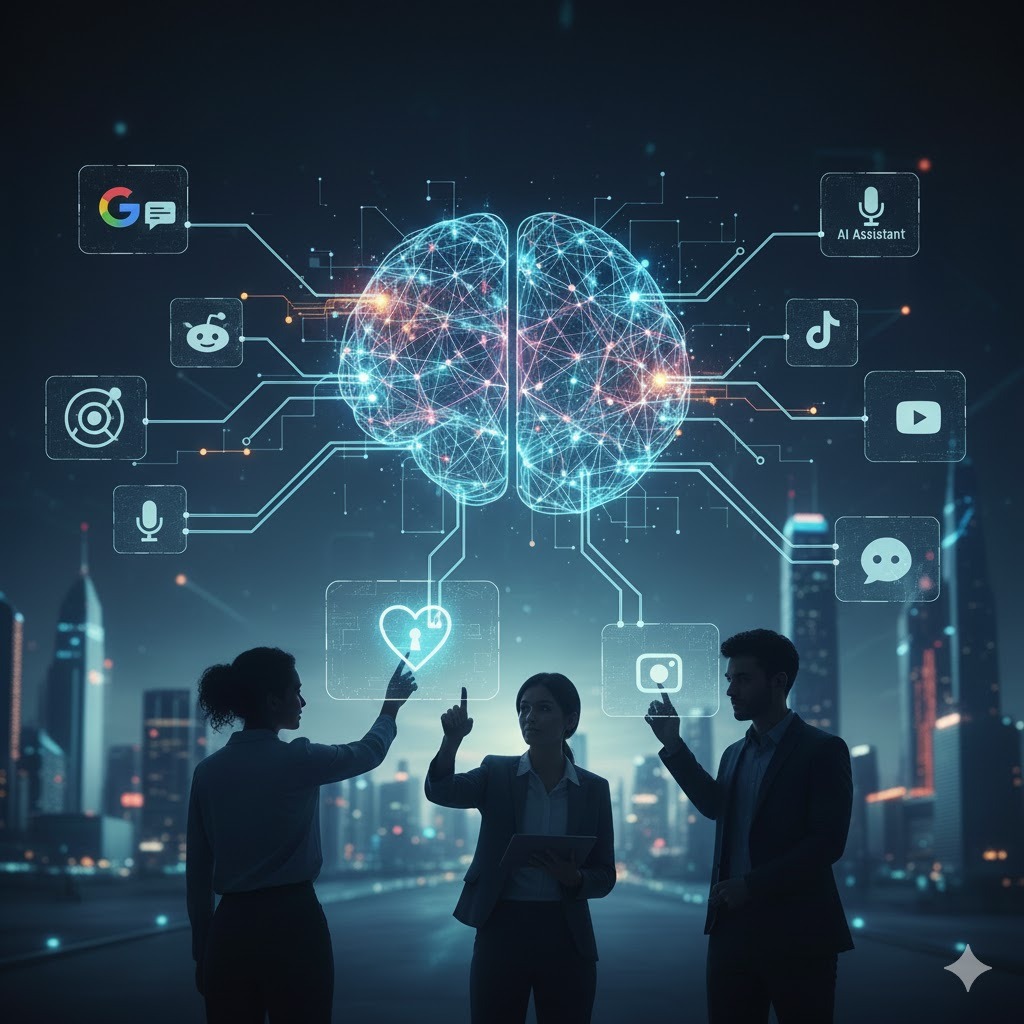
Winning Visibility in 2026: Incarnate's Blueprint for Search, Social & AI
How forward-thinking brands are adapting to the new reality where algorithms, authenticity, and AI-driven discovery reshape the digital landscape
The rules of visibility have fundamentally changed. In 2026, being seen is no longer about gaming a single algorithm or buying your way to the top of search results. It's about understanding an interconnected ecosystem where traditional search engines, social platforms, and AI assistants all play critical roles in how audiences discover and engage with brands.
For companies navigating this complex terrain, the question isn't just "How do we rank?" but "How do we show up everywhere our audience is looking?" This is the challenge that progressive marketing teams are solving right now, and the strategies they're employing offer a blueprint for success in this new era.
The Fragmentation of Discovery
Gone are the days when Google was the singular gateway to the internet. Today's consumers discover brands through a fragmented constellation of touchpoints. They might start with a ChatGPT query, validate findings on Reddit, watch a TikTok review, check Instagram for social proof, and only then visit a website directly.
This fragmentation means visibility now requires what industry insiders call "omnichannel presence with coherent messaging." Brands must maintain consistency across platforms while adapting their content to each channel's unique culture and format. A LinkedIn thought leadership piece demands different treatment than a TikTok explainer, yet both must reinforce the same core brand narrative.
The most successful companies in 2026 aren't treating these channels as separate silos. They're building integrated strategies where each platform amplifies the others, creating a cumulative effect that's greater than the sum of its parts.
Search Beyond the Search Box
Traditional SEO isn't dead, but it's evolved dramatically. Google's AI-powered Search Generative Experience now synthesizes information from multiple sources before presenting results, meaning brands need to be cited as authoritative sources rather than simply ranking for keywords.
This shift has sparked what some are calling "AEO" – AI Engine Optimization. The focus has moved from keyword density to establishing genuine expertise, authoritativeness, and trustworthiness. Brands are investing heavily in creating comprehensive, well-researched content that AI systems recognize as credible and worth citing.
But search optimization extends far beyond Google. Voice search through smart speakers, visual search on Pinterest and Google Lens, and conversational search through AI chatbots all require different optimization approaches. A robust 2026 search strategy accounts for all these modalities, ensuring brand content is discoverable however and wherever people are searching.
The Social Algorithm Paradox
Social media platforms in 2026 present a fascinating paradox. Their algorithms have become simultaneously more sophisticated and more unpredictable. They can detect authentic engagement with uncanny accuracy, yet they change their ranking signals frequently enough to keep even seasoned marketers guessing.
The winning response isn't to chase every algorithm change. Instead, leading brands are focusing on what remains constant: human behavior. Content that sparks genuine conversation, provides real value, or evokes authentic emotion consistently performs well regardless of algorithmic tweaks.
This has led to a renaissance of community-building. Rather than broadcasting to followers, brands are creating spaces for dialogue. They're hosting live sessions, responding thoughtfully to comments, and featuring user-generated content. The goal isn't just reach but resonance – creating moments that matter enough for people to pause their scrolling and engage.
Short-form video continues to dominate attention, but there's a growing appetite for depth. Carousel posts that educate, long-form videos that tell compelling stories, and newsletter-style social content are all gaining traction as audiences tire of pure entertainment and seek substance.
AI as the New Front Door
Perhaps the most dramatic shift in 2026 is the rise of AI assistants as discovery platforms. When someone asks ChatGPT, Claude, or Perplexity for recommendations, they're not clicking through ten blue links. They're receiving curated answers that synthesize information from across the web.
For brands, this means visibility increasingly depends on being part of the training data and indexed content that AI systems draw from. The brands that AI assistants recommend are those with strong digital footprints, consistent messaging across authoritative sources, and clear value propositions that AI can easily articulate.
This has created interesting opportunities for what marketers call "conversational presence." Brands are optimizing their content to answer the specific questions their audience asks AI assistants. They're creating FAQ pages, detailed guides, and comparison content that helps AI systems accurately represent their offerings.
Some forward-thinking companies are even developing their own AI-powered tools and experiences, becoming part of the AI ecosystem rather than just trying to be visible within it. Interactive product finders, AI shopping assistants, and personalized recommendation engines help brands control their narrative while providing genuine utility.
The Content Quality Imperative
Across all these channels, one truth emerges clearly: quality has never mattered more. Both human audiences and AI systems have become adept at distinguishing between content created to provide value and content created merely to game algorithms.
The brands winning visibility in 2026 are investing in genuine expertise. They're hiring subject matter experts, partnering with credible voices, and taking the time to create comprehensive resources rather than churning out shallow content at scale.
This doesn't mean every piece needs to be a 5,000-word dissertation. A well-produced 60-second TikTok that genuinely helps someone solve a problem is high-quality content. A carousel post that synthesizes complex information into digestible insights is high-quality content. Quality is about the ratio of value delivered to attention required.
Measurement in the Age of Privacy
As privacy regulations tighten and cookie-based tracking declines, measuring visibility has become more challenging. Brands can no longer rely solely on precise attribution models that track every touchpoint.
The solution lies in developing more sophisticated approaches to measurement. Top-performing companies are combining traditional analytics with brand lift studies, sentiment analysis, and even good old-fashioned customer surveys asking "How did you hear about us?"
They're also getting comfortable with ambiguity. In a world where a customer might discover a brand through an AI recommendation, research it on Reddit, see it on Instagram, and finally convert through a Google search, perfect attribution is impossible. What matters more is understanding the overall trajectory and identifying which investments are moving the needle on awareness and consideration.
Building for the Long Game
The most crucial insight for 2026 is that winning visibility is a marathon, not a sprint. Quick hacks and shortcuts might generate temporary spikes, but sustainable visibility comes from building genuine authority and trust over time.
This means making long-term investments in owned media channels like email lists, podcasts, and YouTube channels. It means consistently showing up on social platforms even when engagement ebbs and flows. It means creating the kind of comprehensive, authoritative content that earns citations and backlinks naturally.
The brands that will dominate visibility in the coming years aren't necessarily those with the biggest budgets. They're the ones that understand their audience deeply, create content that genuinely serves them, and show up consistently across the fragmented landscape of discovery platforms.
In an era where visibility is harder to buy and easier to earn, authenticity isn't just a buzzword. It's the foundation of a sustainable strategy. The blueprint for success in 2026 isn't about manipulating systems but about creating genuine value and making sure that value is discoverable however and wherever your audience is looking.
The future of visibility isn't owned by those who master a single platform or algorithm. It belongs to those who build coherent, valuable presences across the entire ecosystem where their audience lives and searches. That's the blueprint, and it's available to any brand willing to put in the work.
---
As digital discovery continues to evolve, the companies that stay flexible, audience-focused, and committed to quality will find themselves not just visible but indispensable.